Happy Chirp · Jun 6, 2026 · 1:48:08
Aim fit and live well! ft. Mahlaqa Shaukat
Diving into some extremely insightful conversations with Mahlaqa Shaukat, owner and founder of Pakistans gym Aim Fit that changed the fitness scene in the country.
with Mahlaqa Shaukat
7 min read
This one is just me sitting down with Mahlaqa Shaukat, the founder of Aim Fit. If you know the happy place that is Aim Fit studios, you’ll know the energy Mahlaqa has poured into building a community where women actually feel alive. But what I love about this conversation is how far back we go, to the real, vulnerable moments that shaped her, and how honestly we talk about the hard parts. Not just the business highs, but the panic, the identity loss of motherhood, and the heavy cultural scripts we are all untangling around our bodies.
From oxford nerd to founder
Mahlaqa never planned for fitness. She was the academic child, the maths and physics girl, studying a triple degree in engineering, economics, and management at Oxford. She tells me, “I was a nerd through and through. My entire existence was my academic achievements.” At Oxford, she saw her friends doing half marathons and 10k runs as a side hustle. It was a jolt. In her elite private school in Pakistan, sports for girls just was not a priority. So when she picked up rowing in her fourth year, she realized how generally unfit she was. That was an awakening.
A panic attack that changed everything
Right before her Oxford exams, sitting in the library, she had a panic attack. She describes it plainly: “All of a sudden my heart rate went up, and I felt like I was going to have a heart attack and die.” She called the NHS helpline. The guy on the phone told her she might be having a panic attack and recommended yoga. She could not stand that feeling, so she looked up yoga studios that very moment. In the middle of exam season, she started going to hot yoga classes. She signed up for a 30-day challenge and did not miss a single day. “I kept going back because I felt better the next 24 hours. Even though it was a hassle, I did not want to take a day off.” That daily reprieve planted the seed.
London, loneliness, and a dance class that lit her up
After Oxford, Mahlaqa moved to London to work as a consultant. The shiny corporate world was lonely. She remembers crying in a black cab once when her mom called, for no good reason. Her mom, who also struggled with anxiety, kept telling her to exercise. She found a trainer at Deloitte’s company gym, a former Broadway dancer who taught a crazy, music-blasting dance class. “I love to dance, and if I could mix my love for dance with exercise and never have to get on a treadmill again, that moment was it for me.” That joy in movement stayed with her.
Building a community, not just a gym
When she moved back to Pakistan, she walked into a local gym and realized nothing like that existed. So she started teaching dance classes in a borrowed space. Her sister Noor joined her. The first studio had no light, leaked when it rained, but they designed an experience, not just a workout. “We are not a fitness space or a gym. We are a community.” Mahlaqa tells me about an older woman at the studio who pulled her aside and said, “I lost my husband a year ago. Aim Fit is not about a fitness class. It is about just feeling alive.” That is why they kept their standards global and their vibe welcoming. Aim Fit became my happy place, a tagline the members themselves gave them.
Motherhood, identity, and keeping the business alive
Mahlaqa’s first son was born three years into the business. She calls that transition the hardest. “The first child redefines you. You are going through this loss of identity: who was I before and what am I becoming now?” She talks about wanting to do everything herself, refusing help, and the guilt and control spirals that many moms will recognize. Even with a supportive family and a husband pushing her to get help, the internal work was hers alone. “You can have all the help in the world, but you are still dealing with that identity loss on your own.” And then COVID hit, nearly shutting them down. They refused to cut team salaries, and she felt herself creeping back toward that panic attack state. But they launched an online platform, raised venture capital, and came out stronger. Today, Aim Fit has members joining from Canada and Australia, a digital community that only grew because they had to pause everything else.
Exercise is about so much more than weight
We spend a long time untangling this mess. “Exercise connected only to weight loss is such a big loss,” Mahlaqa says. She points out the science: the four daily dose hormones (dopamine, oxytocin, serotonin, endorphins) that exercise gives you. The impact on mental health and metabolic diseases is blaringly loud. She brings up the concept of health span versus life span. “Once you are in a disease, your health span has ended. Your life span is still there.” She wants women to think about the estrogen bomb: that protective hormone declines after menopause, and the muscle loss accelerates. “Muscles are organs that keep us young. It is like a pension fund. If we do not put in it now, then what?” It is not about looking good in clothes. It is about being able to run with your kids, to have independence, to feel strong.
The daily reset and the power of small habits
Mahlaqa talks about how prayer, for her, is a reset. She reflects on a course she took on positivity quotient where the core teaching was to meditate five times a day. She turned to the trainer and said, “You mean namaz, right?” She describes how namaz gives her breaks through the day to reset her biochemistry, so a bad moment does not become a bad day. She also talks about atomic habits: not questioning the daily exercise the way you do not question brushing your teeth or dropping your kids to school. “Do a really bad workout if you have to. A half workout, an incomplete workout. Even then, you will thank yourself for doing it.” That is the discipline that keeps the noise down.
Choosing yourself in a culture that calls it selfish
We touch on nazar, the fear of the evil eye, that often makes women hide their good habits. She tells me she could not comfortably share her pregnancy workouts, even though she knew other women needed to see it was normal and beneficial. “I believe in nazar. But that does not mean you live a scared life. You have to find that balance.” The real protective barrier is humility, she says. If you carry genuine gratitude in your heart, that what you have is from Allah, you do not need to lie and say you have nothing. Modesty is not denial. It is owning your blessings while knowing their source.
Why pakistan needs this conversation
We talk about how hard it is to prioritize health when forces are profiting from us being unfit. Mahlaqa mentions a billboard she saw in Lahore promoting a 1am shawarma craving with a drink. “This should be criminal. You are planting seeds for mental health issues later.” She talks about the social ecosystem: if your friends appreciate your boundaries, you feel encouraged. If they shame you for choosing an early night or a workout, it is so much harder. She wants people, especially women, to ask each other openly: “What are you doing for your wellness?” Like we ask where someone got their outfit, let us ask about their workout, their sleep hygiene, their content diet.
This conversation matters because it pulls fitness off the pedestal of impossible standards and places it right back into our daily, messy lives. Mahlaqa reminds us that the intention behind our choices, whether we are moving to feel better or just to look a certain way, changes everything. And that small, consistent acts, a five-minute stretch, a mindful breath, a prayer at the right time, can be the most radical form of self-love.
More from Happy Chirp
 1:17:01
 Jul 2, 2026
From scratch: Building the life you dreamed of!
with Anum
Anum left her comfort zone repeatedly and never stopped dreaming about what she wanted to achieve.
Listen → 1:29:31
 Jun 18, 2026
Do women dim their light to protect their peace? ft. Hira Hafeez
with Hira Hafeez
How Hira made it in life is a story packed with hard work, consistent faith and divine intervention. One of my favourite conversations on the platform, and you know thats saying something.
Listen →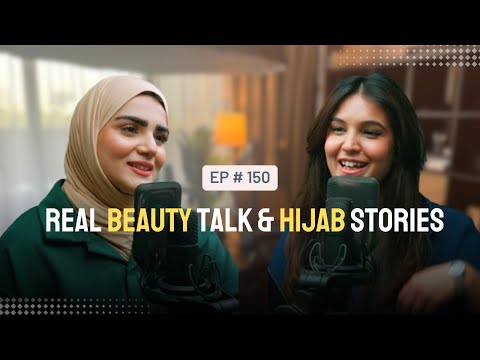 1:16:32
 Ep 150 · Jan 16, 2024
Raw, Real & Radiant Ft. Manalmuffin
with Manal
Tonight, meet Manal. From the transformative impact of hijab to her unexpected journey into content creation, she shares the beauty of her experiences.
Listen →Never miss what's next.
New writing and conversations, straight to your inbox.
One short letter a week. No spam, no pressure.