Happy Chirp · Ep 24 · Feb 3, 2022 · 0:54:32
Becoming Your Own Cheerleader! Ft. Arooj Abrar
In tonight's episode, meet Arooj Abrar. How does she feel to be here?
with Arooj Abrar
4 min read
In this conversation I sit down with Arooj Abrar, the newest member of the Happy Chirp team. She’s a video producer and editor, and with her joining, we’re officially an all-women team. But this chat goes way beyond work. We talk about losing a parent young, finding your path in a creative field, and what it really takes to become your own cheerleader.
Growing up in Rawalpindi and losing her mother
Arooj was born and raised in Rawalpindi. Her family is Urdu speaking, with roots in Agra, India. She describes a childhood in a gated community, a safe bubble where kids played together. But at just six or seven years old, her life shifted. She lost her mother.
“I saw my mother going in the car and it was like mama ganjariya, that was the last time I saw her,” she tells me. It’s a memory that still sits heavy. Her father later remarried, and Arooj is careful to say that her stepmother is her mother now. But the loss shaped her. For a long time, it wasn’t something openly discussed at home. “It’s a touchy topic in your house,” she says, and I can feel the weight of that silence.
The moment that changed everything
Arooj studied pre-engineering and then did a bachelor’s in computer arts from Fatima Jinnah University. But the real turning point came in a university moment she still carries with her. A teacher told her to take control of her life, to stop depending on others to get things done. “I still remember those words,” she says. “It just gave me a lot of confidence to do things on your own.”
That was the spark. She decided then and there that she wanted to work in video production. Not mass communication, but the hands-on world of making videos. It was a clear, quiet decision: this is what I’m going to do.
Navigating the real world
After graduating, Arooj landed a remote job as a post-production artist at Orenda. But remote work took a toll on her mental health. She then joined Pakistan Now, another channel under the same media company that houses Happy Chirp. The transition from university to work was brutal. “I was so confused,” she admits. “Without break I was just working and my life was so messed up.”
She was working hard, but she was also crying. “Literally nobody knows this but I used to cry,” she shares. The adult world wasn’t glamorous. It was about earning money, managing pressure, and figuring out how to exist in a professional space. She was in her own bubble, head down, working. It took time to adjust.
Being the first woman in the room
In the production industry, Arooj was often the first female. She remembers being the girl who had to ask for help with lights or equipment, not because she couldn’t do it, but because people assumed she couldn’t. But she never made her gender a thing. “I work like anybody else,” she says. “Because it’s my job.” That attitude shifted how others saw her. Someone once remarked that she was impressive because she didn’t make being a woman an issue. She just got on with it.
That doesn’t mean it was easy. She had to learn to speak up, to take her family along on the journey so they could understand her world. “If they don’t know they will never understand,” she says. “For them to understand they need to know.” So she started sharing more, bringing them into her life instead of keeping them at a distance.
Learning to give yourself credit
The biggest lesson Arooj carries now is self-kindness. “You have to be your own hero,” she tells me. “In the end it’s just you.” She learned to stop and recognize her own progress, to give herself credit after years of just pushing through. “Believe in yourself,” she says. “We all can do wonders. Just give yourself some credit and just believe in yourself.”
She also talks about divine intervention, about the power of dua. When things worked out, she didn’t just credit her own effort. She saw it as something bigger, something given. That humility, paired with a quiet confidence, is what makes her story so relatable.
Why this conversation matters
So many of us, especially Desi women, grow up being told to work hard but never to celebrate ourselves. Arooj’s journey is a reminder that you can be both soft and strong. You can cry in the bathroom and still show up as the first woman in the room. You can lose a parent and still build a life you’re proud of. You can be your own cheerleader, even when no one else is clapping.
If you’re in a season of doubt or exhaustion, I hope this episode feels like a gentle nudge. You’re allowed to give yourself credit. You’re allowed to be kind to yourself. And you’re allowed to be your own hero.
More from Happy Chirp
 1:17:01
 Jul 2, 2026
From scratch: Building the life you dreamed of!
with Anum
Anum left her comfort zone repeatedly and never stopped dreaming about what she wanted to achieve.
Listen → 1:29:31
 Jun 18, 2026
Do women dim their light to protect their peace? ft. Hira Hafeez
with Hira Hafeez
How Hira made it in life is a story packed with hard work, consistent faith and divine intervention. One of my favourite conversations on the platform, and you know thats saying something.
Listen →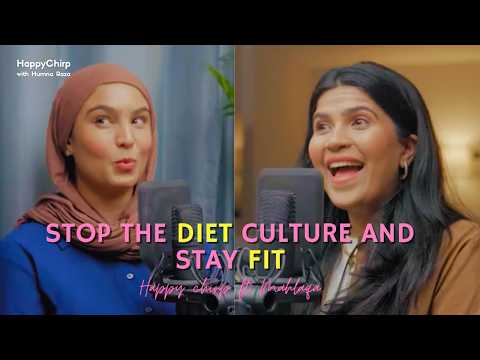 1:48:08
 Jun 6, 2026
Aim fit and live well! ft. Mahlaqa Shaukat
with Mahlaqa Shaukat
Diving into some extremely insightful conversations with Mahlaqa Shaukat, owner and founder of Pakistans gym Aim Fit that changed the fitness scene in the country.
Listen →Never miss what's next.
New writing and conversations, straight to your inbox.
One short letter a week. No spam, no pressure.