Happy Chirp · Ep 102 · Nov 24, 2022 · 1:00:39
Dear Sister: Lights, Camera & Action!
Sisters, tonight we are talking about Pakistani media. How is media evolved over time?
with Alishba & Sanya
6 min read
Today I sit down with my sisters Alishba and Sanya, and we dive into the beautiful, messy, and often frustrating world of Pakistani media. Alishba is a media student, Sanya has been there, and I have my own little corner of the internet with this podcast. So when we started talking about how our dramas, films, and the whole ecosystem have evolved, it wasn’t just an academic chat. It was personal. It was about what we grew up watching, what we avoid now, and what we hope our nieces and nephews will one day see.
The shift from one screen to many
Sanya points out something I felt in my bones. “Initially it was the traditional media because there was no other option, and now digital media has taken over.” We all remember the days when the whole family gathered around the one TV at 8pm. Now we each have our own screen, our own algorithm, our own patience level. Alishba adds that we actually have a choice now. We can pick and choose. But that choice also means we are more fragmented. The family doesn’t always sit together, and the content we consume rarely sparks a shared conversation.
The drama dilemma: saas, bahu, and so much more
We spent a huge chunk of this conversation on Pakistani dramas, and honestly, the love-hate relationship is real. Sanya loves the golden era of Alpha Bravo Charlie and the early 2000s, but she also sees the repetitive loop we fell into. “It’s always about saas bahu types,” she says. Alishba jumps in, saying that while we have evolved as viewers, the characterization is still “very poorly done.” The rich are always mean, the poor are always victims, and heaven forbid a woman speaks English without being portrayed as evil.
Alishba nails it: “Just because you’re modern and well spoken in English is always portrayed as an evil mean person, and that’s not fair to people like me.” I felt that. We are normalizing stereotypes, and young girls watching are absorbing that message. The drama where a girl hides her university clothes under a burqa, takes off the burqa on campus, and becomes rebellious at home, that’s not bridging a gap. It’s making it worse. But we also agreed that showing these realities is necessary, as long as the resolution offers a different path. “If you show love and affection between a couple, between parents, that will bring a positive change to the society,” Sanya said. Instead of the same toxic patterns, we need to see supportive fathers, brothers, and families, so that the audience can relate to something hopeful.
The chicken-and-egg problem is real. We all know that dramas like Udaari and Parizaad were appreciated because they dared to be different. But when a beautifully crafted show like the one about a calligrapher and his son gets low ratings, the industry gets the message loud and clear. Alishba put it bluntly: “It’s the viewers. They need to stop watching the trash for the people in the media to stop making that trash.” And yet, our own mothers sit on the couch, frustrated, but still watching. It’s a guilty pleasure, a strange comfort in the familiar mess.
The web series breath of fresh air
We did find hope in the web series space. Sanya brought up Churails (the auto-caption said “Valley side,” but we all knew what she meant), and Alishba mentioned a recent one starring Saba Qamar and Mr. Shamim. These are stories that exist in our society but traditional TV channels aren’t ready for. The fact that people purchased subscriptions just to watch them tells us there is an audience hungry for change. “It has given hope to other people making dramas or creating content,” Alishba said. It’s a ray of light, a signal that maybe we don’t have to wait for the whole chicken-and-egg cycle to break on its own.
The unclear lines of banning
We also talked about the banning culture that makes no sense to any of us. I remember watching an interview of a renowned actress who said, “Let the audience decide what they want to see.” Alishba and Sanya were both frustrated. How were those bizarre, obscene morning shows allowed to air for years without any censorship, but a drama with a strong message gets banned? Sanya said the reasons are “very dumb” and the criteria is unclear. Alishba pointed out that the bans often seem based on Western ideas rather than what’s actually obscene or vulgar. We need a clear, consistent standard, and until then, it feels like random moral policing.
Who gets to be an actor?
This is where I got a little heated. Why is it that if you’re famous, you can become an actor? If you’re a model, you can act. If you have that one typical face, fair skin, and a good body, you’re in. Alishba said, “Acting should be taken as a profession instead of just taking it as a chance.” Sanya shared that she often discusses this with her husband, who always wanted to act but never saw a path because he didn’t fit the mold. The industry casts people based on their follower count, not their skill. And even when strong actors are given the same stereotypical script, their talent is buried.
We need acting schools, proper training, and auditions based on the character’s requirement, not beauty standards. A hero can be a father working hard to support his daughters. A hero can be a trans person. A hero can be anyone. But we keep reducing heroes to fair skin and an iPhone. Alishba mentioned a recent drama where the actor’s skin color was altered to fit a certain look, and that’s just messed up. It’s a huge flaw in how we perceive characters.
The validation of art and the degree dilemma
Alishba, being a media student, and Sanya, having been one, talked about how degrees in creative fields are still not taken seriously. “When I started my university and told people I’m doing a media degree, they’d ask, ‘Are you going to come on TV?’” Sanya recalled. The older generation doesn’t understand that a mass comm degree is vast and leads to real jobs now, especially with digital media. But there’s still a lack of institutes. “If the industry is growing, there are more artists, more actors, there should be more institutes to polish them,” Alishba said. I agree. Art is not something you can just box into a curriculum, but the validation of a degree can open doors. Still, if a portfolio is amazing, I will hire that person regardless, because I know the societal barriers that keep talented people from pursuing their passion.
Creating for the audience that’s still evolving
I ended this conversation with a little personal share. I started this podcast knowing that long-form, meaningful content doesn’t have a huge audience yet. People scroll past for fast trends. But I told my sisters, “I’m just creating content for my future audience. When they evolve, all of this will be there.” I’m trying to be the egg, patiently waiting for the chicken. Eventually, more people will want to sit with a conversation like this. Until then, I’m grateful for the ones who do. Thank you for giving me an hour of your time. That means more than a quick double-tap on Instagram.
More from Happy Chirp
 1:17:01
 Jul 2, 2026
From scratch: Building the life you dreamed of!
with Anum
Anum left her comfort zone repeatedly and never stopped dreaming about what she wanted to achieve.
Listen → 1:29:31
 Jun 18, 2026
Do women dim their light to protect their peace? ft. Hira Hafeez
with Hira Hafeez
How Hira made it in life is a story packed with hard work, consistent faith and divine intervention. One of my favourite conversations on the platform, and you know thats saying something.
Listen →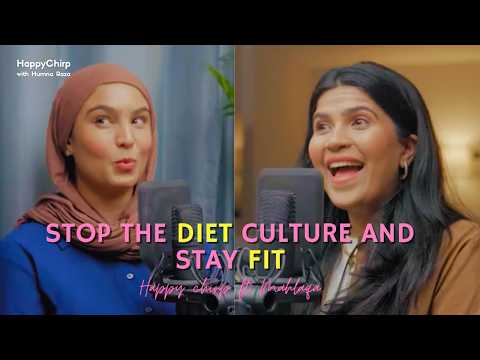 1:48:08
 Jun 6, 2026
Aim fit and live well! ft. Mahlaqa Shaukat
with Mahlaqa Shaukat
Diving into some extremely insightful conversations with Mahlaqa Shaukat, owner and founder of Pakistans gym Aim Fit that changed the fitness scene in the country.
Listen →Never miss what's next.
New writing and conversations, straight to your inbox.
One short letter a week. No spam, no pressure.