Happy Chirp · Ep 124 · Jun 20, 2023 · 0:56:51
Empowering Women Through Sports Ft. Karishma Ali
Tonight's guest is Karishma Ali, a footballer from Chitral, KPK, who is breaking gender norms and inspiring others as the first female player from Chitral to represent Pakistan internationally.
with Karishma Ali
5 min read
Today I sit down with Karishma Ali, a footballer from Chitral who broke barriers as the first woman from her region to represent Pakistan internationally. We talk about growing up in a conservative community, the hate she faced for playing football, and the 300 girls now training through her foundation. This conversation is about resilience, but it is also about the small things we rarely discuss: sports bras, periods, and the safe spaces women need just to show up.
Growing up with a father who saw more
Karishma was born and raised in Chitral, with no technology and a deep closeness to nature. She calls it a beautiful upbringing, one where her father never sat her down to say what a good girl does. Instead, he encouraged her to go outside, play, and explore. She tells me, “I don’t remember my mom sitting me down and saying, this is what a good girl does. That helped me grow as a resilient little girl.” That freedom planted a seed. When she was nine, watching the 2006 FIFA World Cup with her father and a Dutch teacher living in their home, she knew she wanted to be a footballer. No one told her it wasn’t for girls. She simply believed it could be for her.
Finding football in a place that said no
Moving to Islamabad for school at the age of 11, Karishma carried that dream with her. She went to Roots and immediately asked if there was a football ground. There wasn’t much, but she made it work. She played with the boys during school hours, joined a club, and trained at 7 a.m. Before classes. She remembers, “I used to be like, sir I need to train. Kids used to sometimes make fun of me, they would look at me like, that’s just so cute.” But she kept going. Her first international break came when she made the team for the Jubilee Games in Dubai. Later, she played in the AFL International Cup in Australia. Still, the road was littered with things outside her control: the football federation’s political fights, the ban that kept the women’s national team off the field for nearly eight years. She describes it bluntly: “The women’s team played in 2014 last, and then it was banned for eight years. They’d do nothing, they’re like 30, 35, and when they wake up with this unbanned, what do we do now?”
Turning hate into a foundation
When Karishma’s story went viral back home, many in Chitral did not celebrate. She received hate messages, her father’s personal details were shared, and a local political meeting actually voted against her work. Some accused her of destroying the culture, even drawing a horrifying parallel to prostitution. She tells me quietly, “They were relating it to prostitution. I was scared for my life, for my parents’ life.” At 18, reading those messages every day, she could have stopped. Instead, she started the Chitral Women’s Sports Foundation (initially called the Chitral Women’s Sports Club) to create opportunities for other girls. In 2018, with a little money from friends and family, she bought a few kits and coached 60 girls herself. They walked two hours each day to reach a safe venue away from the villages. Today, alhamdulillah, around 300 girls are playing football, volleyball, and cricket under that foundation. For Karishma, that is the achievement that matters most, more than any award.
What girls actually need to play
We spend a long time talking about the environment for women in sports, and Karishma does not sugarcoat it. Even now, she cannot go running in a park at 6 a.m. She says, “I’m so scared. And it’s like, imagine for the rest of the girls and women.” The issue is not just about playing, it is about the little everyday freedoms. When men debate shorts or what women wear on the field, they miss the point. She points out the double standard: “Men also wear shorts when they play football, so why are you only attacking the women?” Journalists have asked the women’s national team about shorts in press conferences, as if the fabric matters more than the skill.
The small things that matter
One of the most honest parts of this conversation is when Karishma talks about the things nobody mentions. Like periods. She recalls telling a coach she couldn’t warm up the same way because she was on her period, and he got mad. She reflects, “If that’s me after all the freedom I’ve received, imagine the girl coming from the village.” Then there are sports bras. In a typical football kit, no one thinks about the sports bra, but for a girl running, jumping, and trying to perform, it is essential. Many girls don’t have one, and the discomfort affects their confidence and their game. So Karishma’s foundation started a drive, distributing 250 sports bras in Chitral and more in Quetta. She says, “We need to normalize this. These are not small things, actually big things, but we make them seem smaller because they are not discussed.” That sentence stayed with me.
Closing: hope is a long game
This episode left me thinking about the quiet daily fight so many women are waging. Karishma is optimistic, even now, even when the country feels like it is breaking. She says simply, “I love this country so much. Just continue doing the work. We possibly could not live here if all the good people decided to give up.” She reminds us that nearly half the population is women, and we cannot develop while keeping them out of the economy, out of the workforce, out of the field. Whether you are a mother wondering if your daughter can dream bigger, or a young woman looking for a sign to take up space, I hope this conversation nudges you. Small things matter. The first step matters. And sometimes, one girl with a football can change a whole community’s idea of what is possible.
More from Happy Chirp
 1:17:01
 Jul 2, 2026
From scratch: Building the life you dreamed of!
with Anum
Anum left her comfort zone repeatedly and never stopped dreaming about what she wanted to achieve.
Listen → 1:29:31
 Jun 18, 2026
Do women dim their light to protect their peace? ft. Hira Hafeez
with Hira Hafeez
How Hira made it in life is a story packed with hard work, consistent faith and divine intervention. One of my favourite conversations on the platform, and you know thats saying something.
Listen →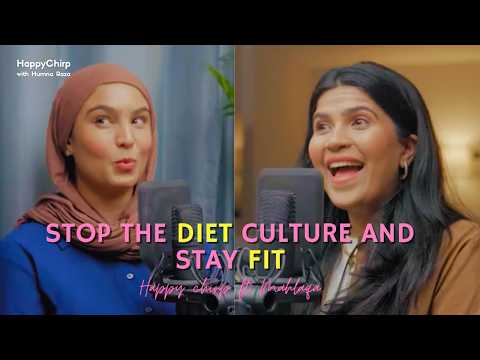 1:48:08
 Jun 6, 2026
Aim fit and live well! ft. Mahlaqa Shaukat
with Mahlaqa Shaukat
Diving into some extremely insightful conversations with Mahlaqa Shaukat, owner and founder of Pakistans gym Aim Fit that changed the fitness scene in the country.
Listen →Never miss what's next.
New writing and conversations, straight to your inbox.
One short letter a week. No spam, no pressure.