Happy Chirp · Ep 81 · Sep 13, 2022 · 1:11:45
How To Raise Good Kids Without Punishment? Ft. Erum Rehman
In tonight's special episode we are in conversation with Erum Rehman and we're discussing parenting, motherhood, and why Erum chose to talk about it?
with Erum Rehman
5 min read
In this conversation I sit down with Erum Rehman, a content creator who has been gently reshaping how Pakistani mothers think about discipline. We talk about the guilt, the confusion, and the small, everyday shifts that help us raise good kids without punishment. This is not a conversation about perfect parenting. It is about unlearning the fear-based patterns so many of us grew up with, and finding a way to guide our children with love instead of control.
The guilt of not knowing
Erum tells me she had no idea what positive discipline was until her son was born. Before that, she was stuck between two fears. If she was strict, she felt guilty. If she was lenient, she worried she would spoil him. “I thought if I don’t scold, I’m doing nothing, and the child will be ruined,” she says. That fear, bacha bigar jayega, the child will be spoiled, sits heavy on so many of us. We inherit it from our own childhoods, where discipline often meant a slap, a raised voice, or the silent treatment. Erum realized that most Pakistani mothers, even educated ones, have never been taught another way. She started reading, taking notes, and slowly learning that there is a middle path. One where you don’t punish, but you also don’t let everything slide. And where your child still listens.
What even is positive discipline?
Positive discipline is not about being permissive. It is about setting boundaries with respect. Erum explains it simply: unconditional love comes first. No matter how badly your child behaves, your love should not be conditional. “Unconditional love should not be discontinued, no matter how bad the behavior,” she says. When children feel that love is tied to their actions, they start believing that they are only worthy when they are good. That belief follows them into adulthood, into their relationships, into how they see themselves. Positive discipline is about separating the child from the behavior. You can say no to the action without withdrawing your love. That is the foundation.
Respect is a two-way street
We often demand respect from children but forget to offer it back. Erum shares a small but powerful example. She was at a passport office with her son. There were empty seats, but she asked him to stand so an elder could sit. Later, she realized she could have handled it differently. She could have said, “Beta, let’s find another seat together,” instead of making him feel small. “Respect is not just for elders,” she says. “It is for everyone.” When we model respect, our children learn it. If we shout at the house help or speak harshly to a family member, they absorb that as normal. Respect is not something we can demand through fear. It has to be given to be received.
The first year is just survival
One of the most honest parts of our conversation is about the first year of motherhood. Erum remembers the fog of it. The exhaustion, the hormonal shifts, the pressure to lose weight, the hair fall. She says, “I didn’t even have the sense to think about my weight. I was just trying to survive.” Yet so many new mothers are asked about their bodies, compared to others who bounced back faster. Erum urges women to give themselves a full year. A year for the body to recover, for the mind to settle, for the soul to catch up. “The first year is not about getting your old self back,” she says. “It is about learning who you are now.” That grace is something we rarely extend to ourselves, and it matters.
Connection over correction
Erum repeats a phrase that stays with me: connection before correction. If your child feels disconnected from you, no amount of scolding will truly reach them. She describes how children crave attention, and if they don’t get positive attention, they will settle for negative attention. A toddler spilling water again and again might just be trying to see if you will look at them. Instead of yelling, she suggests getting down on their level, explaining calmly, and offering an alternative. “You have to connect first,” she says. “Then they will hear you.” That connection is built in small moments. Fifteen minutes of undivided attention at bedtime, asking specific questions about their day, playing a game they choose. It is not about quantity of time, but quality of presence.
Breaking the cycle, one apology at a time
One of the hardest things for our generation is apologizing to our children. We were raised to believe that saying sorry to a child diminishes our authority. Erum flips that. “We can only teach children to apologize by apologizing ourselves,” she says. When we lose our cool, when we snap unfairly, we can turn to our child and say, “I am sorry. I should not have spoken to you like that. I was angry, but that is not an excuse.” That moment does not weaken us. It shows them that mistakes are human, and repair is possible. It also breaks the cycle of fear. If a child grows up never hearing an apology from a parent, they learn that power means never having to say sorry. That is a dangerous lesson to carry into adulthood.
Why this conversation matters
So many of us are parenting in the dark, trying to do better than what we received but not knowing how. Erum’s message is not about being a perfect mother. It is about being a present one. It is about choosing connection over control, respect over fear, and small, consistent efforts over grand gestures. This conversation is an invitation to pause, reflect, and maybe unlearn a few things. Not because we are broken, but because we want our children to grow up feeling whole.
More from Happy Chirp
 1:17:01
 Jul 2, 2026
From scratch: Building the life you dreamed of!
with Anum
Anum left her comfort zone repeatedly and never stopped dreaming about what she wanted to achieve.
Listen → 1:29:31
 Jun 18, 2026
Do women dim their light to protect their peace? ft. Hira Hafeez
with Hira Hafeez
How Hira made it in life is a story packed with hard work, consistent faith and divine intervention. One of my favourite conversations on the platform, and you know thats saying something.
Listen →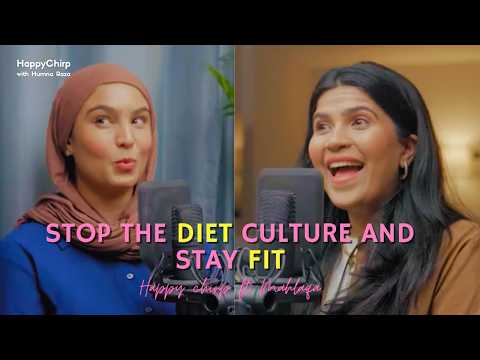 1:48:08
 Jun 6, 2026
Aim fit and live well! ft. Mahlaqa Shaukat
with Mahlaqa Shaukat
Diving into some extremely insightful conversations with Mahlaqa Shaukat, owner and founder of Pakistans gym Aim Fit that changed the fitness scene in the country.
Listen →Never miss what's next.
New writing and conversations, straight to your inbox.
One short letter a week. No spam, no pressure.