Happy Chirp · Apr 22, 2021 · 0:46:48
Language Imparts Identity Ft. Nadia Naghman
Language is the road map of a culture. It tells you where its people come from and where they are going.
with Nadia Naghman
5 min read
This episode is just me and Nadia Naghman, a former Urdu professor who spent 35 years teaching the language before she retired. And honestly, I needed this conversation. I’ve told you before how I feel the gap between the beautiful Urdu my elders speak and the mix I manage. So I asked Nadia to come and walk me through the deeper reasons we’ve drifted from our mother tongue, and what we can actually do about it, especially for our kids.
The ghost of the colonial hangover
Nadia doesn’t start with grammar rules. She starts with history. “Agar iski talaash kiya jaye ke hum Urdu se itna door kyun ho gaye, toh thoda sa tareekh mein safar karna padega,” she says. If we really want to know why we’ve become so distant from Urdu, we have to travel back a little in history. She walks me through the layers: the Mughals brought Persian, which mingled with the local languages to shape Urdu, and then the British arrived and turned English into the language of power. Suddenly, speaking English meant you might become a ruler. Speaking your own tongue became a sign of being lesser.
Nadia calls this “ahsaas-e-kamtari,” an inferiority complex born from colonization that we still haven’t shaken. “Hum apne aap ko bara sabit karna chahte hain,” we want to prove we’re someone, so we reach for English and push Urdu down. She’s not against learning English, she’s clear about that. But she’s pained by the way we’ve made Urdu small in our own homes.
Language is identity, not just a subject
I asked her what we actually lose when we lose Urdu. Her answer was instant. “Yeh sirf zaban nahi hai,” it’s not just a language. “Is mein humari tehzeeb jhalakti hai.” Our whole culture, our way of being, reflects through it. When a child can’t read Urdu, they can’t access Ghalib, Iqbal, Manto, Nasir Kazmi. They’re cut off from a literary tradition that holds so much of who we are.
And it’s not just about the greats. Nadia points out the little daily things. In her family, her grandmother told stories, and those stories were in Urdu, carrying a rhythm and a warmth that translation can’t touch. When our children stop hearing those stories in their own language, they lose a way of belonging to their own ground. “Jab hum Urdu bolne wale ko dekhte hain, samajhte hain ke shayad use angrezi nahi aati,” she says with frustration. We assume an Urdu speaker doesn’t know English, as if one cancels out the other. That’s a lie we’ve been telling ourselves for too long.
Bringing stories back, one video at a time
After retiring, Nadia didn’t sit still. She remembered how much her own children loved bedtime stories, and she saw how few parents were telling them now. So she started a YouTube channel, recording Urdu children’s stories. She even learned illustration and editing so she could add simple visuals, because kids today are on screens anyway. “Jo medium unke hath mein hai, usi istemal karo,” she says. Use the medium they already hold in their hands. If they have a phone, bring the stories there.
She also felt the absence of the old literary magazines, the “risaale” that used to carry serialized novels, travelogues, and poetry. So she started a Facebook page where she shares Urdu literature, a kind of digital museum for adults. She calls it a small effort, but you can hear the deep intention behind it. This is her way of planting seeds for the next generation, offering something beautiful where there’s been silence.
It starts at home and in the classroom
We talked for a long time about what parents and teachers can do. Her advice was direct and kind. “Bachchon par zulm na karein ke zaban unki pehchan hai,” she urges. Don’t oppress children by making their own language seem worthless. If you treat Urdu like an embarrassing old relative, your child will learn to feel shame too. Instead, she says, show them love. Read them a story in Urdu before bed, even if it’s just ten minutes. Type your WhatsApp messages in Urdu script so they see it’s alive.
To teachers, her message was especially tender. “Bachche agar Urdu se bhaag rahe hain, toh aap dekhein ke aap unke dil mein is zaban ki mohabbat kaise paida kar sakte hain.” If kids are running from Urdu, ask yourself how you can create love for the language in their hearts. That’s the teacher’s real job: to be so full of love for the subject that a child can’t help but be drawn in. She believes a good teacher can change a child’s relationship with Urdu completely.
Why this conversation stays with me
This episode is not about being anti-English. It’s about healing a wound we’ve carried for generations. Nadia made me feel that every small step we take, every story we tell our kids in Urdu, every time we refuse to mock someone for speaking it, we’re stitching that wound closed. It’s quiet work, but it matters. So if you’ve ever felt awkward speaking Urdu, or if you’re raising kids in a mostly English world, I hope Nadia’s voice in this episode gives you a little courage to try. One story, one sentence, one “lahja” at a time. InshaAllah, the language will find its way back.
More from Happy Chirp
 1:17:01
 Jul 2, 2026
From scratch: Building the life you dreamed of!
with Anum
Anum left her comfort zone repeatedly and never stopped dreaming about what she wanted to achieve.
Listen → 1:29:31
 Jun 18, 2026
Do women dim their light to protect their peace? ft. Hira Hafeez
with Hira Hafeez
How Hira made it in life is a story packed with hard work, consistent faith and divine intervention. One of my favourite conversations on the platform, and you know thats saying something.
Listen →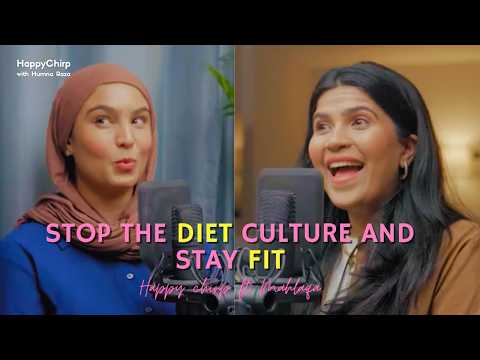 1:48:08
 Jun 6, 2026
Aim fit and live well! ft. Mahlaqa Shaukat
with Mahlaqa Shaukat
Diving into some extremely insightful conversations with Mahlaqa Shaukat, owner and founder of Pakistans gym Aim Fit that changed the fitness scene in the country.
Listen →Never miss what's next.
New writing and conversations, straight to your inbox.
One short letter a week. No spam, no pressure.