Happy Chirp · Ep 75 · Aug 23, 2022 · 0:59:56
Marriage Vs. Career, Skin Care & Women Bosses Ft. Anmol Sultan
In tonight's special episode, meet Dr. Anmol Sultan.
with Anmol Sultan
7 min read
In this conversation I sit down with my friend Dr. Anmol Sultan, an aesthetic physician. We talk about the messy, winding road from medical school to a career she never planned, the real tension between marriage and professional ambition, and why being a woman in charge often means navigating a minefield of expectations. This one is personal, honest, and full of the kind of insight you only get from a friend who has been through it.
Sometimes the path finds you
Growing up, Anmol wanted to be a doctor. That part was clear. But her ambitions kept shape-shifting. First year of medical school, her dad wanted her to be a cardiologist. Second year, her mum pushed dermatology. Then came gastro, nephro, even neurosurgery. The one thing she never pictured was becoming an aesthetic physician. “I did not think that this is what I was gonna end up doing,” she tells me. Yet here she is, not only practicing aesthetics but thriving in it. What changed? She gave herself permission to explore. “It’s too early to decide, and it’s also never too late to decide.” That single line is a lifeline for any student feeling boxed in by parental pressure or the terrifying log kya kahenge, what will people say.
Anmol’s turning point came during a house job when she picked up a side hustle at a clinic simply to fill time and escape a difficult period. Working alongside a mentor who trained her, she discovered the joy of doing something with her hands. It felt more tangible than writing prescriptions. She pursued a diploma from the American Academy of Aesthetic Medicine in Dubai, where she was the youngest in a room full of surgeons and residents. That experience cemented something powerful: “You don’t need to be a dermatologist to practice aesthetics.” A whole career opened up, not because of a rigid plan but because she followed what felt right, one small step at a time.
Marriage, career, and the illusion of choice
This is where the conversation gets real. Anmol, like so many Desi women, faced a crossroads. She could pursue an exceptional career abroad, or she could stay in Pakistan and build a life with her husband, whose business roots are here. She chose the latter. Her words stay with me: “I could either have an exceptional career and a bad marriage, or a good career and a good marriage over here.” She isn’t sugarcoating it. Long distance, she says, makes a difference. Partnership means having someone there for the lows and the highs. So she made a decision that prioritized the relationship, not because she was told to, but because she weighed the pros and cons and felt it was right for the empire they’re building together.
But she insists the conversation itself must happen. Too often, women surrender their dreams without a real discussion, under the illusion of choice. “It’s fine as long as you’re having that conversation,” she says. “It’s a partnership, not just you and your life.” When a husband can’t move and a wife’s ambition would uproot the family, the decision isn’t simple. But the difference is whether both people treat it as a team effort, not a sacrifice disguised as inevitability. That framework shifts everything. It’s no longer “I gave up my dream” but “we chose what’s best for us right now.”
Being a woman in authority
Anmol now holds a leadership role in her clinic, second in command after the boss. She’s responsible for hiring, firing, and managing a team of about 35 people. And she has felt firsthand that her authority doesn’t land the same way a man’s does. “If you are in an authoritative figure, you are naturally not taken as authority-wise as a man,” she says. Even when she sets clear rules, her male counterpart gets more natural compliance. The reason, she explains, is conditioning. We’re raised to picture men as the final decision-makers. Women are taught to be polite, submissive, to use words like please and sorry excessively. That “extra niceness” is a trap. It blurs boundaries and makes a woman seem less serious.
Anmol recalls moments when she reached her limit, raised her voice, and then went home and cried because she felt she’d lost her professional integrity. The paradox stings: to be heard, a woman may have to act in a way that gets her labeled as unstable. “What a crazy boss, she lost her mind,” people say. The blame rarely lands on the team’s disrespect. Over time, she’s learning that you can be friendly, but you cannot be a pushover. The skill lies in communicating boundaries calmly and removing the tentative language. It’s not about becoming cold or constantly in boss mode. That, she believes, creates a toxic workplace. It’s about being a leader, not just a boss.
The boss and the leader
We talked about the line between the two. A boss flexes authority, demands respect through volume and ego. A leader thinks about the team’s growth, the eventual goal, the health of the workplace. Anmol has seen people slip into that harsh boss persona after being challenged repeatedly, especially when their own insecurities are at play. She gets it, because as a new mom returning to work postpartum, her mind wasn’t always sharp, and she struggled to project stability. In leadership, you often have to mask personal turmoil. It’s hard, but she says reflecting on those moments is how you evolve. You ask, “Was my reaction warranted? How can I do this in a healthier way?” Instead of just letting your emotions dictate the room.
A toxic culture can start with just one person who brings insecurity and ego into every interaction. She notes, “If you are insecure for one reason or the other, it seeps into how you manage.” The antidote is constant self-checking and clear, compassionate communication. That’s not easy in a society where women are already fighting to be taken seriously. But it’s necessary if we want workplaces where people aren’t drained every single day.
Lifting as we climb
One of the most inspiring parts of this conversation was hearing Anmol’s anger at the gatekeeping in her field. When she was starting out, senior doctors refused to share techniques and tips, seeing her as a future competitor. That sting pushed her to fund her own diploma and learn from international mentors. Now, young aspiring aesthetic physicians reach out to her regularly, asking for guidance. Instead of shutting the door, she dreams of hosting affordable workshops on Botox, fillers, and contouring for newcomers. “It feels really bad to be in that position where you ask somebody for help and you’re not given that guidance because you’re perceived as a potential threat,” she says. The refusal to mentor, she adds, shows a lack of growth mindset and deep insecurity. True pioneers build an industry, not a wall around it.
Her plan to share knowledge isn’t just about technique. It’s about changing the culture. When enough people choose to lift others, the whole profession elevates. And that energy is contagious. Anmol’s story reminds me that the best role models are the ones who refuse to let their own struggles become a reason to make others struggle harder.
Why this conversation stays with me
Anmol walked through topics that so many of us navigate quietly: the parental pressure to become a certain kind of doctor, the guilt of maybe not wanting that, the impossible math of career and marriage, the daily frustration of not being taken seriously as a woman in charge. She didn’t offer easy fixes. She offered honesty. And in that honesty, there’s permission to pause, reflect, and maybe make a different choice. I hope this conversation feels like a chat with that wise friend who reminds you that you’re not alone and that you’re worthy whether you’re grinding in a clinic, building a home, or somehow doing both.
More from Happy Chirp
 1:17:01
 Jul 2, 2026
From scratch: Building the life you dreamed of!
with Anum
Anum left her comfort zone repeatedly and never stopped dreaming about what she wanted to achieve.
Listen → 1:29:31
 Jun 18, 2026
Do women dim their light to protect their peace? ft. Hira Hafeez
with Hira Hafeez
How Hira made it in life is a story packed with hard work, consistent faith and divine intervention. One of my favourite conversations on the platform, and you know thats saying something.
Listen →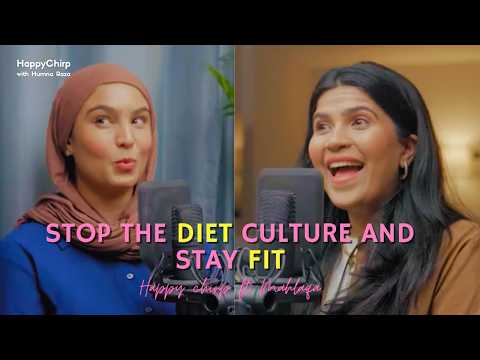 1:48:08
 Jun 6, 2026
Aim fit and live well! ft. Mahlaqa Shaukat
with Mahlaqa Shaukat
Diving into some extremely insightful conversations with Mahlaqa Shaukat, owner and founder of Pakistans gym Aim Fit that changed the fitness scene in the country.
Listen →Never miss what's next.
New writing and conversations, straight to your inbox.
One short letter a week. No spam, no pressure.