Happy Chirp · Feb 11, 2021 · 1:13:53
Rishta Culture
On living away from home, rishta culture and self-awareness!
with Arham
11 min read
This one is a conversation with a really dear friend, Arham. She is a doctor by profession, and we were together at LMDC, where she was my senior. We sit down and talk about growing up in a family where her mother was in the foreign services and her father was in the police, what it was like moving to Poland as a teenager, the loneliness of hostel life, the weight of the rishta culture, and the deep self-awareness that can come from sitting with yourself when life gets hard.
This conversation is raw and honest. It is about the things we don’t tell our parents, the grief we carry, and the power of simply writing down what you feel.
Growing up between power and a foreign land
Arham grew up in a household where her parents held positions of influence. But as a child, she didn’t really understand what their jobs entailed. It was only in high school and medical college that the realization hit. They were not doing average jobs. There was a certain amount of power involved, but her parents never let it get to the kids.
When Arham was around 13, her mother got posted to Poland. Because the kids were starting higher education, they went with her. Her father stayed back in Islamabad for his job. It became a split family situation. Poland is not a place we see a lot in media or anywhere else. It was unfamiliar territory at an age that is already so vulnerable. Arham describes 13 as a time when you are just entering your formative years. To get up and leave your family, leave your friends circle, and go somewhere so unknown was the most difficult part.
The coldness of being unwelcome
There was nothing welcoming about that place. The people were not welcoming either. Arham explains that Poland has a history of being at war with its neighbors and was not on the map of the world for 200 years. This bred a mentality where they did not want outsiders. The elderly people were flat out racist. At supermarkets, people who could speak English would refuse to on purpose. They looked down upon you if you did not speak Polish. It was a cold behavior, a feeling of being completely unwelcome.
Arham was lucky in her class, but her sister experienced more racism at the hands of her own classmates. It was racism in the form of bullying. Silly, stupid things. At 13, you are entering your teenage years. All you want is to fit in. You want to be welcomed. As teenagers, you find your sense of security in other people’s approval of you. Everybody craves acceptance. But in Poland, that acceptance was elusive. You are just a person trying to explore and understand who you are, always looking for validation from external resources. When that validation is denied, it is tough.
The bond that hardship builds
Despite the unpleasant experience, one really good thing came out of it. The combined experience made the bond between Arham and her sister a lot stronger. They needed each other, and they had each other. It was a common experience they could talk about. Their bond really grew in that situation.
What is striking is that they never told their mother how unhappy they were. You just don’t tell your parents that you are unhappy. You don’t want to make them unhappy. Everyone just has to stick it out because of the posting. Arham reflects that her mother never really asked about it, and they never really told her. I can relate to this. Growing up, I experienced bullying, and my brother experienced a lot of bullying. Moving every two years in the army meant new people and new schools. But you never really tell your parents. I don’t know why. It just happened a lot.
But these experiences planted seeds of empathy. Arham says it made her think, “If I am ever in their position, I am going to make the other person feel welcome. I am going to do whatever I can for the other person to help him or her out. Because that is the least I can do for them and that is what they deserve.” It made her kinder. It made her more of an “I don’t care what you think” sort of person. She would always go and become friends with the isolated person, the underdog. She even got bullied for that.
Choosing a path and questioning it
After four years in Poland, Arham came back to Pakistan for medical college. She chose LMDC. Part of the reason was a desire for freedom, independence, and self-growth. She needed to go off and live by herself. She wanted to see what it was like living by herself, doing things for herself. Coming from a place where she felt so unwelcome, LMDC was a huge change. People were so nice and so accepting. It was a warmth she had not experienced in so long.
She chose MBBS partly because her mother always valued a professional degree, a licensed skill you can sell in any corner of the world. At that point, she didn’t know herself well enough to know if there was something else she would rather do. She says, “Nobody should even be told to make that decision for their lives at 17 or 18 years.” The system is broken. Who at that age has the maturity and self-awareness to make a decision that impacts the rest of their life?
Later, working in the UK, she started feeling doubtful. She genuinely enjoys medicine, but she began to question if this was the life she wanted. A life that consists mostly, if not entirely, of a career. She likes singing, dancing, reading poetry, going to musical evenings. She saw a future of just work, research, and kids, and it sowed seeds of doubt. She is still in that phase of uncertainty.
The suffocation of rishta culture
We talk about the rishta culture. Arham believes that as a concept, arranged marriage is not inherently a bad thing. It has been made toxic. The pressure is on both boys and girls. She has been in situations where she was talking to a guy and it was very clear he was not interested. He was either in a relationship or just happy in his life. That is toxic in so many ways. The boy feels pressured enough to do it. It wastes everyone’s time. She cannot even fully blame the guy because he is under so much pressure from his parents.
There is a suffocation in the experience. Parents tell their children to talk to people, but then they also influence the decision heavily. Our parents taught us to think for ourselves, but when it comes down to practicing it, it is not that easy for them. They are confused themselves about how they want to behave. It is a generational gap. Stability is important, and they are absolutely right about that. But if values don’t align, it is a recipe for an unhappy marriage. Big picture, you are secured, there is food on the table, but the unsaid communication and banter you need between two people is missing.
Losing yourself to find yourself
Before Arham left for the UK, a series of unfortunate events happened. In mid-2018, her grandmother passed away. It was a huge loss. It was the first time she really grappled with grief and the inevitability of mortality. It changes your perspective on a lot of things. It spills over into how you deal with other relationships. She stopped talking to one of her best friends. Then, a severe physical pain started in her back and shoulder. It was 24/7, severe pain with pins and needles and numbness. She went through a battery of tests, but nobody could give her a diagnosis. That was emotionally and mentally taxing.
Towards the end of that time, her relationship with her mother became a bit toxic. In the span of six months, she lost three important relationships. The grief she had for her grandmother was akin to the grief she had for these lost connections. In the midst of all this, she found out she failed an exam. Then her UK visa came through, and she left.
Her family was unhappy. There were so many things wrong in her life. But she knew she needed to detach herself from the situation. She needed a change of environment. And that is exactly what she got. Living alone in the UK, setting up her apartment, her bills, her bank account, she had a lot of time to reflect. She started journaling and meditating. The realizations she had about herself, the insight she got, was something she never really had before.
She says, “Difficult situations don’t change you. They reveal you to yourself.” She wanted to come out of it with something good for herself. She wanted it to be a source of strength, not negativity. She discovered that growth and finding yourself does not always come from learning. A lot of the time, it comes from unlearning. Unlearning certain beliefs, certain behaviors. You have to first accept and understand yourself. What are your weaknesses? What are your strengths? There is a quote by the psychologist Carl Jung that resonates with her: “Who looks outside dreams. Who looks inside awakes.”
The power of writing down your feelings
This process of self-awareness gave her a power she cannot have otherwise. When you are a self-aware person, you are secure. And when you are a secure person, you have power. Nothing outside can rattle you so much. A simple act of writing, being by yourself, meditating, journaling, reflecting can do that for you.
One of her biggest realizations was that she was always afraid of losing her kindness. In difficult situations, it is very easy to become bitter. She realized she can still be kind and still be an empath while saying no to things or situations or people that violate her boundaries. She can point out and eliminate toxic behavior from her life. If she doesn’t do these two things, she is being an empath to everyone but herself. That is just not the right way to live.
Journaling helped her process emotions. She would ask herself: What am I feeling? What happened that made me feel this way? Why did it make me feel this way? Just doing those three steps gives you so much insight. When you are just feeling stuff, you are reacting and letting that energy out into the environment for others to absorb. When you write things down, you find the words for your emotions. You identify them. Finding words to acknowledge your emotions is a huge step towards growth and progress.
It is not about being the most perfect person. It is about being somebody who believes in growth and in progress. Having a high level of self-esteem and self-worth is good for everybody. It is not a selfish thing to do. It spills over to the people you love. It affects your relationships. Later, when you have kids, it will spill over into your parenting. Being a secure person, a self-aware person, and a person who has a good level of self-worth is very, very important.
Arham says that two things genuinely changed her life and gave her so much more control over her emotions, her thoughts, and her mental health: meditation and journaling. If there is anyone struggling with self-identity, processing their emotions, being abusive towards other people, or having dysfunctional relationships, she would say just try it out. Within two days of three to five minute meditations, she felt better. Just sit down and try it for yourself for ten days or two weeks. See if it makes a difference.
This conversation was not planned to go down this path, but it did. It went exactly where it needed to go. I learned a lot from this episode, and I hope you do too. If you are feeling lost, or if the noise around you is too loud, maybe try sitting down with yourself. You might just start listening to your own voice for the first time.
More from Happy Chirp
 1:17:01
 Jul 2, 2026
From scratch: Building the life you dreamed of!
with Anum
Anum left her comfort zone repeatedly and never stopped dreaming about what she wanted to achieve.
Listen → 1:29:31
 Jun 18, 2026
Do women dim their light to protect their peace? ft. Hira Hafeez
with Hira Hafeez
How Hira made it in life is a story packed with hard work, consistent faith and divine intervention. One of my favourite conversations on the platform, and you know thats saying something.
Listen →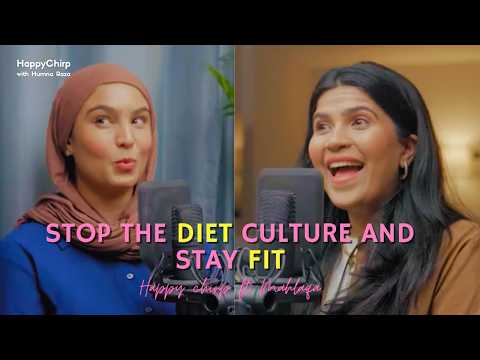 1:48:08
 Jun 6, 2026
Aim fit and live well! ft. Mahlaqa Shaukat
with Mahlaqa Shaukat
Diving into some extremely insightful conversations with Mahlaqa Shaukat, owner and founder of Pakistans gym Aim Fit that changed the fitness scene in the country.
Listen →Never miss what's next.
New writing and conversations, straight to your inbox.
One short letter a week. No spam, no pressure.