Happy Chirp · Ep 116 · Mar 21, 2023 · 1:02:26
Supporting Women Through Pregnancy and Motherhood Ft. Goud.pk
Tonight's guests are Ummam Baig & Meesha Baig who are the founders of Pakistan's 1st and only pregnancy and baby milestone tracker app - Goud.pk.
with Ummam Baig & Meesha Baig
6 min read
I have always believed that the small things matter. So when I discovered Goud.pk, an app designed for pregnant women and new mothers up to the first year postpartum, I felt this was exactly the kind of small, thoughtful support that could make a huge difference. Today I sit down with Ummam Baig and Meesha Baig, the sisters behind Pakistan’s first and only pregnancy and baby milestone tracker. Their story is not just about building an app. It is about what happens when you experience a nuclear bomb in your life called motherhood and decide to hold the hands of other women walking through the rubble.
I wanted to be a housewife, and then the baby came
Ummam begins with honesty that still takes my breath away. She did her bachelor’s from NUST Business School, but her real dream was simple. “My passion was to become a housewife and raise kids,” she says. She got married, got pregnant, and floated in that bubble of expecting a mini-me. Then the baby arrived. “She was a very colicky baby, she kept crying. I think 24 hours, 23 hours she was crying. That was really tough.” The wake-up call was brutal. She developed postpartum depression, a lot of anxiety, and then at eight months found out she was pregnant again. The apps she had on her phone told her about baby milestones, but nobody told her her life would completely flip. Nobody prepared her for the level of anxiety, wondering if her baby was even breathing, hearing phantom cries. The isolation was the hardest part.
The day your baby is born, you are born as a mother as well
That invisible weight is something I understand deeply. As Ummam talks, I remember reading that the day your baby is born, you are born as a mother. It is a completely new identity, and everything you knew before gets wiped clean. Ummam describes it like a nuclear bomb going off. “Your whole self is new and your life is new and you cannot go back to it. The more you try to hold on to it, the worse it is.” Even with family support, you can feel alone. In Pakistan, the judgment and the need to justify yourself can make it a whole circus. Meesha, who has a heavy science background with a master’s in novel therapeutics from Imperial College London, watched her sister go through two pregnancies. “I saw women go through it, and how the postpartum period not only affects the person going through it but all the people around it,” she says. During pregnancy, everyone is excited and offers help. Once the baby is here, the focus shifts and the support often vanishes. They wanted to be the people who kept showing up.
Building Goud from a support group to an app
They did not start with code. They started with cups of chai and a physical support group in Islamabad. Without even an Instagram page, they put out a Google form and got 75 sign-ups. Fifteen women showed up, and the conversation was healing. “We came back really happy,” Meesha says. They kept doing these groups, free of charge, because charging for mental health support did not sit right. But soon they saw numbers dwindle. Stigma was one reason. Another? On a good day, a mom might think she does not need it. The app came next, designed by Meesha herself. She downloaded Canva and taught herself user interface design. Getting it onto the App Store was a saga: jumping through hoops to prove accuracy, security, and even providing a bibliography of sources. It took four months longer than the Play Store version. But when it finally launched, the numbers shot up. “It has been insane. We see those numbers going up every single day, and it brings so much joy,” Meesha shares.
Dads are not forgotten
One thing that makes Goud stand out is the male version of the app, with tailored articles for fathers. “We want to involve the dads and make them active members,” Meesha says. The articles range from tips for fatherhood to how to support a pregnant wife and navigate the relationship after birth. They even have pieces on managing postpartum depression in men, something nobody talks about. Ummam notes that a father’s depression often comes out in weird ways, like emotional unavailability, and then the cycle feeds itself. The app’s relationship tab includes things like five at-home date ideas after having a baby. “That bond is the one that is going to outlast every single relationship. Your kids will go off and have their own lives. You are stuck with this man,” Meesha laughs. It is not about expecting him to read your mind; it is about healthy communication. And the response has been surprising: around five percent of their users are men, with some even messaging to convince their wives to attend a mother’s meetup.
The honest challenge of getting women to invest in themselves
While support groups and kid-friendly events do well, workshops aimed at the mother’s own emotional growth struggle to fill. The sisters hosted a workshop on managing emotions and becoming a better parent, and sign-ups were low. “I think we need to create the demand,” Ummam acknowledges. Women want to come as a family, to have something planned for the kids. Working on yourself alone often falls to the bottom of the list. It requires admitting something might be wrong, then doing the work, which is uncomfortable. Their body positivity workshop, opened to all women, did well, but the target audience of moms did not show up. So they are experimenting with reservation fees that go toward the food, making it less daunting while still encouraging commitment. They remain firm: support groups will always be free. The plan for sustainability is to work with baby businesses and incorporate ads so the cost does not fall on the mothers who need it most.
We want to make this a global thing
Their vision is expansive. They aim to scale Goud beyond Pakistan, translate it, and establish physical institutions: spaces with daycares, workshops, lactation counselors, and a place where any woman can just be herself. The conversation turns to the smaller cities where the need is desperate. “We need to go there,” Meesha says. The same skills that helped them sell out events in three days in big cities will be used to reach those overlooked corners. As sisters working together, they have learned to lean on each other and their family, with their mother dreaming up sensory activities for events and their father offering business guidance. It is a family-built effort to help families. “I love raising this baby also,” Ummam says of the company, nodding to how her passion for motherhood is now reshaping lives beyond her own home.
There is no neat bow here. Just an honest reminder that the small things, a chat in a support group, an article sent to a husband, a moment to brush your hair without guilt, can keep you going. If you are pregnant or in that foggy first year, you do not have to do it alone. Goud is free because they want you to find it, and maybe inside you will find a piece of yourself again.
More from Happy Chirp
 1:17:01
 Jul 2, 2026
From scratch: Building the life you dreamed of!
with Anum
Anum left her comfort zone repeatedly and never stopped dreaming about what she wanted to achieve.
Listen → 1:29:31
 Jun 18, 2026
Do women dim their light to protect their peace? ft. Hira Hafeez
with Hira Hafeez
How Hira made it in life is a story packed with hard work, consistent faith and divine intervention. One of my favourite conversations on the platform, and you know thats saying something.
Listen →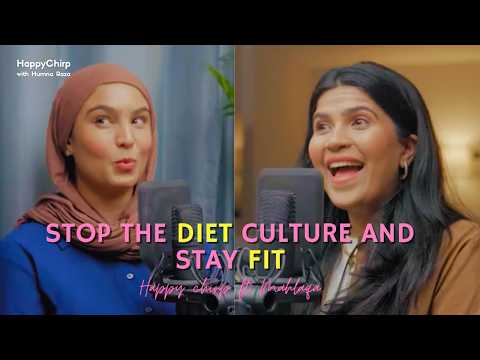 1:48:08
 Jun 6, 2026
Aim fit and live well! ft. Mahlaqa Shaukat
with Mahlaqa Shaukat
Diving into some extremely insightful conversations with Mahlaqa Shaukat, owner and founder of Pakistans gym Aim Fit that changed the fitness scene in the country.
Listen →Never miss what's next.
New writing and conversations, straight to your inbox.
One short letter a week. No spam, no pressure.