Happy Chirp · Ep 69 · Jul 26, 2022 · 1:32:39
The Importance Of Personal Branding Ft. Sana Khalid
In tonight's special episode, meet Sana Khalid. We're talking about her journey as a leader and how she is helping build dream teams.
with Sana Khalid
7 min read
In this conversation I sit down with Sana Khalid, founder of Minerva and the person behind a national digital design conference that almost didn’t happen. We talk about what personal branding actually means, why she sold her jewelry to keep a dream alive, and the messy, honest side of leading a team while figuring yourself out along the way.
Starting with naivety
Sana grew up in a disciplined army family, but her path has been anything but predictable. She studied accounting and finance at Lums, always wanting to become a chartered accountant in Dubai. One night she sent a random application and landed a job simply because her email address was so odd the hiring manager called to ask about it. “The only reason I’m calling you is because you had a very weird email address,” she recalls him saying. That one call led to three years working on clients like submarines, sharing a tiny bedspace with eight other girls, and funding her own exams.
When she returned to Islamabad for a supposed study break, boredom hit within a week. At 24, with little planning, she started Minerva. “It was really stupid,” she admits. “I don’t recommend that.” The initial idea, a better version of a tuition centre focused on real learning, flopped because parents only wanted grades. She and her team did anything to survive: birthday parties, movie nights, even printing. That scrappy period taught her that not knowing all the obstacles can be a superpower. “If anything interesting that I’ve done in my life has been because I just didn’t know better,” she says.
What personal branding really is
A lot of people hear personal branding and think of polished LinkedIn profiles or selling something. Sana describes it simply: helping people become more visible. But the real work is internal. “You can’t have a brand that contradicts who you are,” she explains. It starts with self-awareness. If your job doesn’t align with your core, you’ll feel it deeply. Even if the pay is great and the environment is kind, you might still feel mujhy mazanyara, I just don’t enjoy it. That misalignment exhausts you.
Personal branding, then, is about taking control of the narrative you’re already projecting. Everyone is known for something, whether it’s being the foodie or the one who always knows which movie is out. Doing it consciously means you stop waiting for opportunities and start attracting the ones that are actually meant for you. “If your personal brand is strong, opportunities will come,” Sana says. The aversion some feel, especially in Pakistan, often comes from thinking it’s all show. But she sees it as a responsibility: nobody else is going to bring you those chances.
Leadership lessons I’m still learning
Over a decade of running Minerva, Sana has learned that perfectionism is a trap. She used to micromanage every detail because letting go felt like losing control. But that held her and her team back. “Hire people who are better than you and then let them do their job,” she says. Feedback is still essential, but it should guide, not suffocate.
Culture became her biggest lesson. She stresses that it’s not about bean bags or foosball tables. It’s in the language you use, how you treat guests, and whether people feel safe to voice an idea without being snubbed. She once had team members who were great at their work but didn’t fit the value system. Keeping them affected everyone, draining morale. Now she hires for alignment first.
Compassionate leadership, she believes, is not soft power, it’s strategic. When employees feel safe, they perform better. She recalls asking herself, “If someone I hired is better than me at what they do, isn’t that the point?” A true leader uplifts others, because their growth is the company’s growth. She’s still figuring out how to balance empathy with tough decisions, but she knows that treating people with respect is non-negotiable.
Women, career breaks, and the choice to return
Sana works with two distinct groups of women: those returning after a career break and those navigating everyday workplace dynamics. The returning women, she says, often have something to prove. “She is vicious about her time at work,” she shares about one woman. “I don’t want to waste even five minutes of my time there talking about random stuff.” That focus is a huge asset, but it comes with layers of societal expectations.
In Pakistan, the selflessness of a mother is heavily glamorised, making many women feel guilty for wanting a career. Sana pushes back. A child who sees their mother chasing her dreams grows up with a role model. Financial independence is safety. “If you have to take care of yourself, how are you going to do it?” She asks. She acknowledges that one solution does not fit all: a daycare might transform one workplace but be unfeasible for a five-person startup. Still, compassion and flexibility, like allowing someone to come in late after a rough night, make a real difference. “Whether you do it consciously or not, the feeling of safety impacts everything.”
The conference, the jewelry, and asking for help
While running Minerva, Sana and graphic designer Nida Salman wanted to create awareness about design as a problem-solving tool, not just making things look pretty. They decided to host a national digital design conference. Sponsors doubted them. Days before the event, the food sponsor pulled out. Facing millions of rupees in costs with no clear way to pay, Sana went and sold her jewellery. “I went and I sold it,” she says plainly. The cash flow deficit was temporarily covered. Then, right at the end, a big sponsor came on board, tickets sold out, and the feedback was phenomenal. Even the jeweller, after hearing what she had done, offered to let her buy back her pieces in instalments.
She holds onto that story as a reminder that asking for help works. The primary sponsorship came from a random LinkedIn message. Stefan and Debbie, big international names, said yes to speaking because she just reached out. “If you ask me for help, I’ll also feel nice about myself,” she notes. The only way to know if something will work is to try it.
Writing to calm the chaos
Sana describes her mind like a laptop with a hundred tabs open, all connected. She struggles to separate thoughts and often felt paralysed by decision fatigue. To cope, she turned to writing. Putting things on paper untangles the knots. She started a weekly reflection and planning ritual every Sunday, and at Minerva, she introduced an internal monthly newsletter where every team member writes something, anything. Reading it has become her favourite thing because she learns what people are truly feeling, whether it’s overwhelm or excitement about a book. Writing gives clarity in a world that overloads us with information. It helps you hear your own voice again.
Motherhood and not having it all together
When Humna shares her own struggle of returning to leadership after having a baby, feeling like she forgot everything she once knew, Sana listens without offering a quick fix. She reminds us that a happy mother is a better mother, and there is no shame in pursuing dreams alongside raising a child. The guilt so many women carry is not a personal failing, it’s a story society handed down. “That selflessness is glamorised,” she says. But the truth is, you don’t need to sacrifice everything to be worthy. You just need to keep showing up, even when you don’t have all the answers. And if you need to sell your jewellery to fund a dream, she’s proof you might get it back.
This conversation stays with me because it refuses to pretend that leadership is tidy. Sana’s honesty reminds us that personal branding is really about knowing yourself first, and that the best things start with a little naivety, a lot of heart, and the courage to ask for help.
More from Happy Chirp
 1:17:01
 Jul 2, 2026
From scratch: Building the life you dreamed of!
with Anum
Anum left her comfort zone repeatedly and never stopped dreaming about what she wanted to achieve.
Listen → 1:29:31
 Jun 18, 2026
Do women dim their light to protect their peace? ft. Hira Hafeez
with Hira Hafeez
How Hira made it in life is a story packed with hard work, consistent faith and divine intervention. One of my favourite conversations on the platform, and you know thats saying something.
Listen →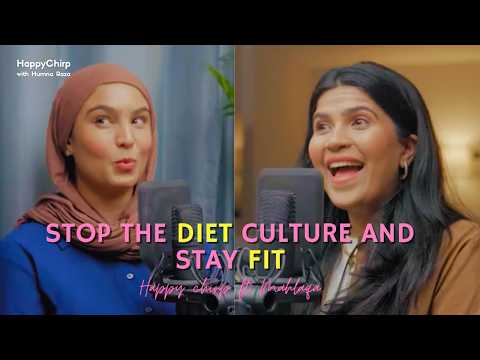 1:48:08
 Jun 6, 2026
Aim fit and live well! ft. Mahlaqa Shaukat
with Mahlaqa Shaukat
Diving into some extremely insightful conversations with Mahlaqa Shaukat, owner and founder of Pakistans gym Aim Fit that changed the fitness scene in the country.
Listen →Never miss what's next.
New writing and conversations, straight to your inbox.
One short letter a week. No spam, no pressure.