Happy Chirp · Ep 120 · Apr 25, 2023 · 1:20:24
Turning Passion Into a Profession Ft. Ayesha Mahmood
Tonight's guest is Ayesha Mahmood, an entrepreneur, and a businesswoman. She owns an online accessories business called 'shop.thirtyy' and a coaching startup where she helps others start their own businesses.
with Ayesha Mahmood
7 min read
I sit down with Ayesha Mahmood, an entrepreneur who runs an accessories brand called shop.thirtyy and a coaching startup where she helps others launch their own small businesses. But what we really talk about is the long, quiet work of turning something you love into something you do. Not the overnight success story, but the years of collecting bits of broken jewelry as a child, studying subjects no one else picks, and refusing to let log kya kahenge, what will people say, stop you. Ayesha is young, already doing so much, and this conversation is a gentle reminder that passion turned profession requires patience, stubbornness, and a deep trust in your own crooked path.
The quiet beginnings of a shauq
Ayesha tells me she never had older sisters or cousins to inherit a love for jewelry from. Her mother had no interest in it. But since the age of six, she started buying little pieces. “Mujhe jewelry bahut pasand thi,” she says, I really loved jewelry. When something broke, she would take apart the bits and make something new. She became the girl everyone gifted jewelry to, because they knew her shauq, her passion. It wasn’t a grand plan. It was just a small, persistent joy that later became the seed of a business. She points out that so many women have a similar shauq, something they do for the love of it, but rarely see it as a serious career. “Shauq hai na padha aur tumhe shauq hai na jewelry ka?” She says, it’s like people see it as a hobby, not something serious. But that seriousness, she discovered, comes from within.
Choosing the hardest unknown, on purpose
When it was time for her bachelor’s, Ayesha had a list of disciplines and picked accounting and finance, not because she knew it, but because she had no clue what it was. “Maine kaha theek hai maine accounting aur finance karna hai, kyunki mujhe bilkul nahi pata tha ye kya hota hai,” she tells me: I said okay, I’ll do accounting and finance, because I had absolutely no idea what it was. This became a pattern. Later, for her master’s, she chose supply chain management, again a subject she knew nothing about. She wanted to learn what she did not already know. That appetite for the unfamiliar shaped her mind. She realized education became joyful only when she studied something she truly wanted to understand, not just a degree to collect. It was hard, but she says that’s when she fell in love with learning: “Mujhe padhai se itna pyaar ho gaya hai,” I have fallen so deeply in love with studying.
The invisible weight of being the eldest
Ayesha is the oldest sibling, and she carries a responsibility that many eldest daughters will recognize. She doesn’t just want to do well for herself; she feels she must be the role model her younger siblings can look at and think, “If my sister can do it, so can I.” She internalized that pressure deeply: “Mujhe feel hota hai ki main agar kuch nahi karungi toh mere behen bhai kya karenge?” If I don’t do something, what will my siblings do? It’s a silent weight, one her parents never put on her but she took on herself. She wanted to show them a path. That means trying to be perfect, to be the one who goes first, who fails so they can learn, who succeeds so they can follow. It’s a lot, and she names it plainly. But she also acknowledges that this pressure gave her a quiet drive, a reason to not settle for the average life that society often hands to women.
Starting with nothing but emotional capital
When Ayesha finally decided to start her jewelry business, she had very little money. She had saved a small amount from remote copywriting and content work. She went to the wholesale market with her father, bought a small stock, and shot all her product photos on her phone. There was no fancy camera, no studio. She opened a bank account, a cash on delivery account, and figured out every tiny step through Google and YouTube. She remembers the first order came on the third day. Life hack: she didn’t need a huge investment. What she needed, and what she asked her family for, was emotional support. “Financial support nahi chahiye, mujhe emotional support chahiye,” I don’t need financial support, I need emotional support. Her mother never added extra household responsibilities during her work hours. Her siblings helped with shoots. That feeling of being held emotionally allowed her to build slowly, without burnout. It’s a model many women in joint or traditional families can relate to: you don’t need permission to start, but a little softness at home makes all the difference.
No shortcuts, just showing up every day
Ayesha is blunt about the myth of quick success. She says there is no shortcut to a business with real substance. “Jitna shortcut hoga, utni hi short term win hongi,” the more you shortcut, the shorter term your wins will be. She invested in courses herself and saw that the creators who shouted the loudest often had the least depth. The ones with real experience didn’t need to market aggressively; people who truly wanted to learn would find them anyway. That insight shaped her own coaching philosophy. She made two small courses, priced them at just a thousand rupees for both, and never once pushed people to buy. She simply laid out what she had learned, especially the emotional parts, like how to handle self doubt and how to talk to family who don’t understand. She says her goal was never to sell a dream of becoming rich in a month, but to offer a hand to women stuck at home who feel their shauq has no value. And slowly, women started reaching out.
Building a quiet community of home based women
What began as voice notes and long replies to DMs turned into one on one coaching and workshops. Ayesha has now coached 54 women, many of them students, housewives, and women living abroad who wanted to start something small. She runs workshops on finding your passion side hustle and low investment business ideas. She doesn’t just teach technical steps. She sits with them and talks about the shame of wanting more, the fear of being called crazy, the loneliness of not fitting in. “Mujhe har jagah aisa laga ke main belong nahi karti,” she says, I always felt like I didn’t belong. And she tells them that’s okay. That not fitting in is not a flaw; it’s often the first sign you are meant for something different. Her community is a soft space where women can ask, “Should I use a pink theme for my brand?” And get a heartfelt “okay, fine.” It is small, warm, and utterly real.
Why I stopped being scared of being called crazy
Ayesha says people have called her crazy, delusional, and asked why with all her education she is selling jewelry. She smiles and says it’s part of the process. “Agar aapko kuch alag karna hai toh log aapko crazy kahenge hi,” if you want to do something different, people will definitely call you crazy. The trick, she says, is to make peace with yourself. You cannot control what others think. But you can keep working. She repeats that you don’t need to change yourself to fit in; you need to hold onto your dream with a stubbornness that might look insane to others. Her message is simple: be patient, keep going, and know that you are your own biggest strength. “Sabse badi strength aap hi hain,” you are your own biggest strength. That’s not a motivational quote. It’s a quiet truth she has lived.
This conversation is for every woman who feels her passion is too small, her resources are too few, or her dreams are too wild. Ayesha shows that building a life around what you love is not a straight line. It’s a messy, slow, precious process of collecting little things, learning what you don’t know, and refusing to give up, no matter who calls you crazy. If you have a shauq that won’t let you sleep, maybe it’s time to stop hiding it and start, tiny step by tiny step.
More from Happy Chirp
 1:17:01
 Jul 2, 2026
From scratch: Building the life you dreamed of!
with Anum
Anum left her comfort zone repeatedly and never stopped dreaming about what she wanted to achieve.
Listen → 1:29:31
 Jun 18, 2026
Do women dim their light to protect their peace? ft. Hira Hafeez
with Hira Hafeez
How Hira made it in life is a story packed with hard work, consistent faith and divine intervention. One of my favourite conversations on the platform, and you know thats saying something.
Listen →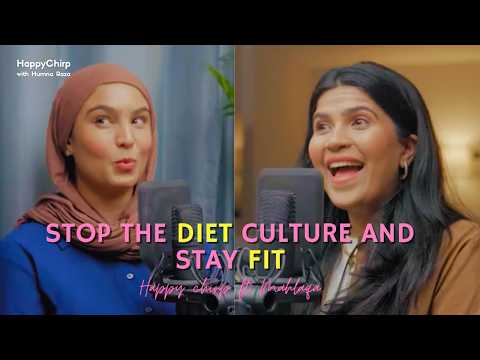 1:48:08
 Jun 6, 2026
Aim fit and live well! ft. Mahlaqa Shaukat
with Mahlaqa Shaukat
Diving into some extremely insightful conversations with Mahlaqa Shaukat, owner and founder of Pakistans gym Aim Fit that changed the fitness scene in the country.
Listen →Never miss what's next.
New writing and conversations, straight to your inbox.
One short letter a week. No spam, no pressure.