Happy Chirp · Ep 137 · Oct 17, 2023 · 0:54:30
What It Means To Be Mentally Healthy? Ft. Zara Maqbool
Tonight's guest is Zara Maqbool.
with Zara Maqbool
5 min read
I sit down with Zara Maqbool again, a mental health professional who has become a familiar voice on Happy Chirp. This time we dig into a question that sounds simple but isn’t: what does it mean to be mentally healthy? Along the way we talk about the reckless use of therapy-speak, the quiet harm of shame, and why parenting has so much to teach us about our own minds.
The danger of armchair diagnoses
Zara points out how Gen Z and Millennials, in their enthusiasm for mental health awareness, sometimes grab a few concepts and become “experts of sorts.” She sees clients who walk in already convinced their spouse has narcissistic personality disorder. “So much of my work in the initial few sessions is to challenge this self-diagnosis,” she says. This isn’t just inaccurate; it can be dangerous. When we label ourselves or others without a full picture, we risk trapping people in a victim mentality or missing the real issues. Mental health is complex, and a few symptoms don’t make a clinical diagnosis. Social media has sped this up. Short-form content strips away context, leaving us with half-learned ideas we then apply to real life. Zara calls it a “quick fix solution” that rarely holds up.
What good mental health actually looks like
So if it’s not about slapping on labels, what is it? Zara describes good mental health as heightened self-awareness. “I’m quite aware of what the situation is and I can make a choice in my head,” she explains. It’s not about being happy all the time. It’s about knowing your triggers, understanding your emotions, and being able to pause and respond rather than react. You still feel sadness, anger, jealousy, but you don’t become hostage to those feelings. You treat yourself with compassion instead of shame. As she puts it, “mental health is about mindfulness of our traumas and triggers in our life.” I share how therapy helped me realize I had never fully processed my grandmother’s loss or even my cat’s death. Those hidden pain points were still showing up in my present life. A good therapist, Zara says, is like a detective making a 3D map of your mind, connecting dots you didn’t even know were there.
Shame doesn’t teach, it traps
A big part of Zara’s work is blocking the shame her clients carry. But does removing shame mean encouraging bad behavior? Not at all. She gives the example of working with men who are abusive. She separates the behavior from the person: what you do is wrong, but that doesn’t define all of you. “You were not born this way,” she tells them. “Let’s look at the system that you were born in that created this part of you.” This isn’t justification; it’s creating space for change. When we shame someone, we essentially tell them they can’t change. Removing shame allows them to take responsibility and actually do the work. Zara also notices that women often demand empathy but struggle to offer it, especially to men. If we want to see change in our relationships and our society, we might need to lead with more compassion, not more labels.
The parenting connection
Somehow, every conversation with Zara circles back to parenting, and I’m not mad about it. We talk about the difference between caregiving and connection. I share how, when I was exhausted from all the chores of motherhood, I had nothing left for genuine connection with my child. But when I had help with the caregiving, I could actually be present. Zara nods. “Connection before correction,” she says. You can’t correct a child (or anyone) unless you’ve built a connection first. And that connection doesn’t come automatically just because you’re the biological parent; it takes effort and a genuine desire to be with them. I think of my own father, who Mashallah is very consistent, but still believes a mother’s focus should be 100% on her kids at all times. Zara pushes back gently, bringing up Donald Winnicott’s idea of the “good enough parent.” Physical presence isn’t the same as mental presence, and our children need us to be mentally present more than anything.
Why boredom is a gift
We also touch on the pressure to constantly stimulate our kids, and ourselves. Children need to feel frustrated, bored, and even upset sometimes to learn how to regulate big feelings. If we design every moment of their lives, we rob them of the chance to hear their own intuition, to be creative, to just be. “Unless there’s empty space, how else will something significant get filled up?” Zara asks. I’ve learned this from my own child, watching him figure things out on his own. And I’m learning it for myself too: it’s okay to have lazy days, to not be productive every minute. We don’t need to fill every silence with a Netflix show or a scroll through our phones. Sometimes the most important thing we can do is sit with ourselves and let the boredom do its quiet work.
This conversation is a gentle reminder that mental health isn’t a checklist or a set of buzzwords. It’s a quiet, ongoing practice of awareness, compassion, and connection. Whether you’re a young woman trying to understand your own mind, a mother navigating the chaos of parenting, or just someone tired of the noise on social media, I hope this episode gives you permission to slow down and get curious about what’s really going on inside you.
More from Happy Chirp
 1:17:01
 Jul 2, 2026
From scratch: Building the life you dreamed of!
with Anum
Anum left her comfort zone repeatedly and never stopped dreaming about what she wanted to achieve.
Listen → 1:29:31
 Jun 18, 2026
Do women dim their light to protect their peace? ft. Hira Hafeez
with Hira Hafeez
How Hira made it in life is a story packed with hard work, consistent faith and divine intervention. One of my favourite conversations on the platform, and you know thats saying something.
Listen →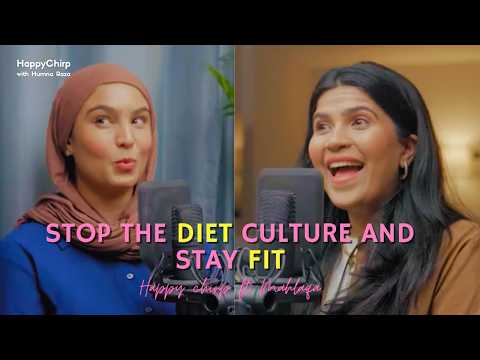 1:48:08
 Jun 6, 2026
Aim fit and live well! ft. Mahlaqa Shaukat
with Mahlaqa Shaukat
Diving into some extremely insightful conversations with Mahlaqa Shaukat, owner and founder of Pakistans gym Aim Fit that changed the fitness scene in the country.
Listen →Never miss what's next.
New writing and conversations, straight to your inbox.
One short letter a week. No spam, no pressure.