Happy Chirp · Ep 112 · Feb 21, 2023 · 0:53:01
Women, Laws & Justice Ft. Jugnoo Kazmi
Tonight's guest is Jugnoo Kazmi, a lawyer who is currently a Special Prosecutor at NAB and has worked for Justice Project Pakistan.
with Jugnoo Kazmi
5 min read
This one is a first for the Happy Chirp. I sit down with Jugnoo Kazmi, a lawyer and Special Prosecutor at NAB, and the first woman lawyer I’ve had on the show. We talk about her path into law, the quiet confidence that comes from living alone abroad, the cases that stay with her, and what she wishes more women knew about their own rights.
Choosing law, and a mother’s quiet influence
Jugnoo grew up in Islamabad, a self-described nerd who now wishes she had lived a little more in her school years. Her mother worked for national television, making documentaries on women’s and children’s rights. Jugnoo didn’t get a sit-down lecture about it. She absorbed it. “My mother’s experience played a huge role,” she says. “Even though she didn’t instill it in me, I absorbed it.” When her mother suggested filmmaking, Jugnoo said no. Law was the pull. Her father encouraged it too, though she briefly toyed with becoming a pilot before getting realistic.
She moved to the UK for both her undergraduate and postgraduate law degrees. It wasn’t entirely her choice. She had gotten into Lums last minute, but her mother insisted she go abroad. “My father said I did not have a choice because some things of course you do for your parents,” she recalls. Looking back, she calls it the best decision of her life, even if it wasn’t hers to make.
What living abroad really teaches you
I asked her what the experience gave her beyond the degree. She was not even 18 when she left. “You’re not daddy’s princess anymore,” she says plainly. “You have to do everything yourself.” That independence built a confidence she carries into courtrooms now. “It’s a very liberating feeling where you feel like you don’t need to depend on anyone.”
She also picked up something from the goras, the white people she studied alongside: a work ethic rooted in discipline and balance. “They would excel and you’re like how do you do it, but that’s the training they get from schools,” she says. Living mindfully, she believes, is what lets you do more without burning out. Coming back to Pakistan, she saw the gaps clearly. It was painful, but it also lit a fire. “I have to make that change here,” she says. “I won’t mince my words.”
The cases that keep you going
Jugnoo’s career has been anything but a straight line. She has worked in law firms, in government, and in the development sector. She has fought for mentally ill prisoners and juveniles on death row. Last year, her team secured a seminal Supreme Court order that took three death row prisoners off the sentence. “That is a big step,” she says, and you can hear the weight of it.
But the story that stays with her is smaller. She fought for a man’s acquittal, and when it came, his mother insisted on treating her to tea. The woman didn’t have enough money to pay the bill. “I understood her pain,” Jugnoo says. “She wanted to thank me, but she did not have the resources.” Later, the mother called her, overjoyed, before Jugnoo even had the official order. “I had tears in my eyes. It’s the impact, not the money. These moments, they help you keep showing up.”
Women, rights, and the nikahnama
We talk about women’s rights in Pakistan, and Jugnoo doesn’t sugarcoat it. The rankings are bad, and it stings to see countries you don’t expect doing better. But she also sees a shift. More women are reaching out about marital rights, guardianship, and they are starting to read their nikahnama, their marriage contract. “This is across all strata,” she notes. The disappointment, though, often comes from educated, wealthy homes. “You can have all the education, all the money, and still hold the same mindset. What’s the point of studying abroad if you can’t understand basic human rights?”
She describes women in elite households who are told they have enough money, so they don’t need to work. They watch dramas, throw kitty parties, and are never encouraged to dream. “Don’t dream,” she says, echoing what they hear. “That’s such a problematic mindset. You don’t necessarily work for money. It’s about productivity, identity, growth.” Rights, she reminds us, are not given. They are yours from birth. “The constitution of Pakistan applies to you whether you are a man or a woman. Nobody has the right to give you that right.”
On not giving up
Before we wrap, I ask what she wants to leave with someone considering law, or any hard path. She doesn’t glorify it. “I’m not going to say you’ll change the world overnight. But if it’s something you truly want, you figure a way out.” She believes in shaping your destiny, at least the parts within your control. When things get hard, she reads about people who persisted through setback after setback. “I would have given up, but they were successful the tenth time, the eleventh time. So don’t give up.”
She also warns against comparing your behind-the-scenes with someone else’s highlight reel. “You don’t know their tests. Just keep going.”
This conversation reminded me why I love doing this work. It broadens my horizons, and I hope it does the same for you. If you’ve ever wondered what it’s like to fight for justice in Pakistan, or needed a nudge to keep going, this one’s for you.
More from Happy Chirp
 1:17:01
 Jul 2, 2026
From scratch: Building the life you dreamed of!
with Anum
Anum left her comfort zone repeatedly and never stopped dreaming about what she wanted to achieve.
Listen → 1:29:31
 Jun 18, 2026
Do women dim their light to protect their peace? ft. Hira Hafeez
with Hira Hafeez
How Hira made it in life is a story packed with hard work, consistent faith and divine intervention. One of my favourite conversations on the platform, and you know thats saying something.
Listen →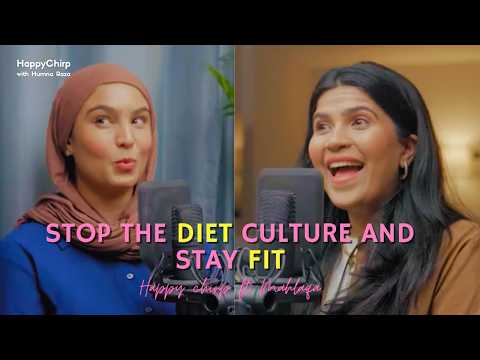 1:48:08
 Jun 6, 2026
Aim fit and live well! ft. Mahlaqa Shaukat
with Mahlaqa Shaukat
Diving into some extremely insightful conversations with Mahlaqa Shaukat, owner and founder of Pakistans gym Aim Fit that changed the fitness scene in the country.
Listen →Never miss what's next.
New writing and conversations, straight to your inbox.
One short letter a week. No spam, no pressure.